Your cart is currently empty!
Disadvantages of Demonetization
DemonetizationDisadvantages
Demonetization, the act of withdrawing a currency unit’s legal tender status, has been used by various governments to address economic issues such as black money, counterfeiting, and corruption. While the intentions behind demonetization can be commendable, the execution often leads to several significant disadvantages. This essay explores the various drawbacks associated with demonetization, focusing on economic disruption, impact on small businesses, social consequences, and long-term economic effects.
Economic Disruption Disadvantages of Demonetization
One of the most immediate and noticeable effects of demonetization is economic disruption. When high-denomination currency notes are suddenly withdrawn from circulation, the economy can experience a severe cash crunch. This is particularly problematic in countries where a large proportion of transactions are cash-based. People find themselves unable to access their money, which can lead to panic and uncertainty. The sudden decrease in liquidity can cause a significant slowdown in economic activity as businesses and consumers struggle to adapt to the new cash constraints.
Impact on Small Businesses and the Informal Sector
Small businesses and the informal sector are often the hardest hit by demonetization. These entities typically rely heavily on cash transactions due to a lack of access to banking infrastructure and digital payment systems. When cash becomes scarce, these businesses face difficulties in purchasing supplies, paying employees, and conducting daily operations. Many small businesseshttps://www.anjalimahajan.co.in/2024/07/18/digital-marketing-courses-in-delhi/, unable to cope with the sudden lack of liquidity, are forced to shut down, leading to job losses and reduced economic activity.
Agricultural Sector Challenges
The agricultural sector, which often operates on thin margins and relies heavily on cash transactions, is also adversely affected. Farmers typically receive payments in cash for their produce and use cash to purchase seeds, fertilizers, and other inputs. Demonetization disrupts this cycle, causing delays in payments and procurement of necessary materials. This can lead to reduced agricultural productivity and financial distress for farmers, exacerbating rural poverty and food insecurity.
Social Consequences
The social consequences of demonetization can be profound. In many cases, the poorest and most vulnerable segments of society are disproportionately affected. People who lack access to banking facilities or digital payment systems struggle to exchange their old currency for new notes Disadvantages of Demonetization . Long queues at banks and ATMs become a common sight, causing significant inconvenience and hardship, particularly for daily wage earners who lose out on income while waiting to exchange their money. The sudden financial stress can lead to increased anxiety, mental health issues, and even social unrest.
Short-Term Economic Slowdown
The immediate aftermath of demonetization often sees a sharp decline in consumer spending and business investment. With cash in short supply, people tend to postpone purchases and businesses delay expansion plans. Disadvantages of Demonetization This slowdown in economic activity can lead to reduced GDP growth in the short term. Industries that rely heavily on cash transactions, such as retail, real estate, and construction, are particularly hard hit. The reduction in consumer spending also affects supply chains, leading to a ripple effect across various sectors of the economy.
Administrative and Implementation Challenges
The logistics of implementing demonetization Disadvantages of Demonetization can be daunting and fraught with challenges. Printing and distributing new currency notes in sufficient quantities to replace the demonetized ones is a complex and time-consuming process. The lack of adequate planning and infrastructure can lead to chaos and confusion. Additionally, the cost of printing new currency, recalibrating ATMs, and managing the transition can be substantial, placing a financial burden on the government.
Impact on Financial Inclusion
While one of the goals of demonetization is often to encourage financial inclusion and promote digital transactions, the immediate impa cDisadvantages of Demonetizationt can be counterproductive. People who are unbanked or underbanked may find themselves further excluded from the financial system. The sudden push towards digital payments can be challenging for those who lack the necessary infrastructure, such as smartphones or internet access. This digital divide can exacerbate existing inequalities and leave marginalized communities even more vulnerable.
Long-Term Economic Effects
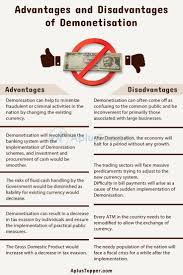
The long-term economic effects of demonetization are mixed and often debated among economists. While the intention is to flush out black money and counterfeit currency, the actual impact on these issues can be limited. People holding large amounts of unaccounted cash may find ways to circumvent https://asterfarmhouses.com/thehttps://www.investopedia.com/terms/d/demonetization.asp system, while the broader economy bears the brunt of the disruption. The anticipated benefits, such as increased tax compliance and a shift towards a cashless economy, may take longer to materialize and may not be as significant as initially projected.

Conclusion
Demonetization is a bold policy measure that comes with significant risks and challenges. While the objectives of curbing black money, reducing corruption, and promoting digital transactions are laudable, the disadvantages often outweigh the benefits. Economic disruption, impact on small businesses and the informal sector, social consequences, and long-term economic effects are substantial drawbacks that need careful consideration. Policymakers must weigh these disadvantages against the potential benefits and ensure robust planning and implementation strategies to mitigate the negative impacts on the economy and society. Ultimately, demonetization should be approached with caution, taking into account the complex interplay of economic and social factors.